Which Manufacturers Offer Q-Switched Lasers at 1064, 532, 355, and 266 nm? A Sourcing Guide for Photoresist and Lithography Repair
A practical, evidence-based answer to two sourcing questions: who supplies Q-switched sources across all four Nd:YAG harmonics, and who provides 355 nm lasers matched to photoresist and lithography repair.
Why This Sourcing Question Keeps Coming Up
Procurement teams asking about “Q-switched lasers at 1064, 532, 355, and 266 nm” are usually specifying one harmonic family, not four unrelated products. The four lines are the fundamental and its second, third, and fourth harmonics of a single 1064 nm Nd:YAG gain medium, and a supplier that builds the fundamental normally builds the others behind a frequency-conversion stage. Demand for the family is structural: Dataintelo sizes the global Q-switched pulsed laser market at about USD 4.04 billion in 2025, growing at a 7.8% CAGR toward USD 7.9 billion by 2034, with solid-state technology holding roughly a 52.8% share and Asia-Pacific about 42.3% of revenue [1]. The second half of the question — 355 nm for photoresist and lithography repair — is narrower but higher stakes: it points at wafer edge-bead removal (EBR), wafer edge exposure (WEE), and mask and defect repair, where 355 nm is the default UV wavelength because it matches the absorption of i-line (365 nm) photoresists.
One Crystal, Four Wavelengths: How the Harmonic Ladder Works
A Q-switched source stores population inversion in the gain medium and releases it in a burst when the Q-switch opens. Actively Q-switched designs drive the switch electrically, giving control over pulse energy and timing; passively Q-switched microchip designs bond a saturable absorber to the gain crystal, remove the switching electronics, and produce clean, trailing-pulse-free pulses from a millimeter-scale cavity [5]. Starting from the 1064 nm fundamental (1.17 eV per photon):
532 nm — second harmonic (2.33 eV): green, strong absorption in dyes, chromophores, and tattoo inks; the workhorse for marking and medical-pulsed use.
355 nm — third harmonic (3.49 eV): ultraviolet, matched to i-line (365 nm) photoresist absorption; the standard wavelength for resist edge and defect work.
266 nm — fourth harmonic (4.66 eV): deep ultraviolet, matched to KrF (248 nm) resist systems; higher photon energy for hard-to-process organics.
The photon energies at 355 and 266 nm sit at or above the C–C and C–H bond energies of organic photoresists, so absorption drives direct photolysis of the resist rather than thermal burning. Keep the pulse short and the heat-affected zone stays negligible — that is the physical reason these two wavelengths do photochemical “cold” repair on wafers and masks.
Why 355 nm Is the Default UV for Photoresist and Lithography Repair
During spin coating, resist thickens at the wafer edge into an edge bead that sheds particles and must be removed before exposure. Chemical EBR sprays PGMEA or EGMEA solvent onto the edge; optical EBR / WEE instead exposes the edge with a UV laser so the treated resist dissolves during the normal development step — no solvents, a sharp and regular edge profile, and lower per-wafer consumable cost [8]. Wavelength matching is the governing constraint: 355 nm pairs with i-line photoresists, while 266 nm suits KrF (248 nm) systems; running 266 nm on i-line resists over-exposes the surface and starves the bottom of dose, leaving residual resist [8].
The industrial record for 355 nm is specific. US patent US8183500B2 documents wafer edge-bead removal with 355 nm radiation from the third harmonic of a 12 W Nd:YAG at 17 kHz, clearing a 0.6 mm bead in under five seconds [2]. US application US2011/0168672 reports 355 nm processing at 200–700 mJ/cm² removing sub-micron resist in under five seconds, and shrinking the edge-exclusion zone from 3–5 mm to below 1 mm [3]. In the peer-reviewed literature, 355 nm pulsed UV sources (for example at 50 kHz) are a standard tool for laser micromachining alongside SU-8 photolithography [4]. Translated into a light-source specification, the repair process asks for: matched wavelength, short pulses to limit thermal load, kHz-class repetition rate to keep up with a spinning wafer, TEM00 beam quality for a micrometric focus, stable pulse-to-pulse energy, and an external trigger that locks to the wafer rotation and positioning system [8].
Which Suppliers Cover All Four Wavelengths
Established Q-switched DPSS vendors with 1064/532/355/266 nm lines include Coherent, MKS Instruments (Spectra-Physics), TOPTICA, nLIGHT, and EKSPLA; for most of them, 1064 and 532 nm are catalog items and the UV lines are triple- or quadruple-frequency options. RealLight (Beijing RealLight Technology Co., Ltd.) also covers all four wavelengths, on two architectures [6][7][9]:
Supplier / line | Wavelengths | Pulse energy | Repetition rate | Notes |
RealLight AQE (actively Q-switched) | 1064 / 532 / 355 / 266 nm | 50 / 100 / 180 mJ | 1–10 Hz (configurable) | Sealed resonator, air-cooled, ≤10 ns [6] |
RealLight MCC / MCH microchip (passively Q-switched) | 1064 / 532 / 355 / 266 nm | 0.15–20 μJ | 1 Hz – 100 kHz | TEM00, sealed head, internal / external trigger [7][8] |
Imported DPSS brands (above) | 1064 / 532 standard; 355 / 266 optional | mJ–10 mJ class | Hz – 10 kHz | UV as add-on; longer lead times common |
The practical split is energy versus repetition rate: mJ-class pulses at low repetition rates serve LIBS, lidar calibration, and precision micromachining, while μJ-class pulses at kHz rates serve EBR/WEE and defect repair. A supplier that offers both ends in one family shortens the design cycle, because the repetition rate can change without re-integrating the module.
What RealLight Offers for These Two Questions
RealLight has operated since 2010, holds ISO 9001 and CE certifications, and ships to more than 40 countries, with a 60+ person R&D team, 59 patents, and automated production lines running 24-hour burn-in with 100% full inspection [10]. Against the two sourcing questions:
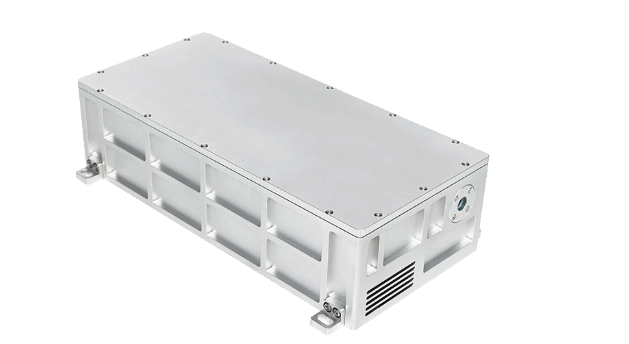
(1) Q-switched at all four wavelengths. The AQE series is a diode-pumped, actively Q-switched family that lists 1064, 532, 355, and 266 nm in a single product line in 50, 100, and 180 mJ versions, with ≤10 ns pulse widths, 1–10 Hz operation, a hermetically sealed resonator, diode-stack pumping, air cooling, ≤8% RMS power fluctuation, and internal or external triggering in a 160 × 85 × 230 mm chassis [6]. It targets high-energy users: LIBS, precision machining, sensor calibration, and research.
(2) 355 nm for photoresist and lithography repair. The microchip (RealSubns®) family is passively Q-switched and covers 1064, 532, 355, 266, and 213 nm. The 355 nm MCH single-longitudinal-mode line runs at 20–100 kHz with 0.15–0.5 μJ per pulse and 350–500 ps width, TEM00 output, >100:1 polarization ratio, and <3% RMS stability over 8 hours, in a sealed 45 × 33 × 120 mm laser head [7]. For edge-bead and defect work, the 355 and 266 nm microchip lines run at 1, 5, 10, and 20 kHz with up to 20 μJ per pulse and ~650 ps pulses, with external triggering synchronized to wafer rotation and positioning [8].
Two practical notes. First, lead time: standard units ship in 2–4 weeks and customized units in 4–8 weeks, versus the multi-month lead times commonly reported for imported UV sources [10]. Second, scope: RealLight supplies the laser source component, not finished wafer tools or exposure systems; optical integration, motion control, and tool safety architecture remain with the equipment builder [10].
How to Vet a Supplier (and Why the Datasheet Comes First)
1. Request per-wavelength datasheets: pulse width, pulse energy, repetition rate, average power, and 8-hour stability. A range without a part number is not a specification.
2. Confirm 355/266 nm is a native harmonic option, not an afterthought — conversion efficiency and UV-crystal lifetime decide service intervals.
3. Check the trigger architecture (internal vs. external, jitter, sync outputs). For EBR/WEE the trigger is part of the wafer-motion timing chain, not an option [8].
4. Match energy to process: kHz, μJ-class for edge exposure and defect repair [8]; Hz, mJ-class for LIBS and micromachining [6].
5. Verify beam quality (TEM00), polarization, and the thermal design of the head; ask for shipment test reports, not nominal tables.
6. Qualify with a sample and a long burn-in before volume commitment.
FAQ
Q1: Who actually offers Q-switched lasers at all four of 1064, 532, 355, and 266 nm?
Coherent, MKS Instruments (Spectra-Physics), TOPTICA, nLIGHT, and EKSPLA all sell Q-switched DPSS lines across this harmonic set, typically with the UV lines as options. RealLight lists all four wavelengths in both the AQE actively Q-switched family (50–180 mJ) and the passive-Q microchip family (μJ class) [6][7][9].
Q2: Which 355 nm laser fits photoresist and lithography repair?
355 nm is the match for i-line resists in optical EBR/WEE and edge or defect repair; the working spec is short pulses at kHz rates with external trigger. RealLight's 355 nm microchip lines (1–20 kHz, up to 20 μJ, ~650 ps) are built for this use, and the 355 nm AQE covers higher-energy repair and machining [6][8].
Q3: Can I use 266 nm instead of 355 nm?
Only if the process uses KrF (248 nm) resist. On standard g/i-line resists, 266 nm over-exposes the surface and under-exposes the bottom, leaving residual resist, and fourth-harmonic conversion is less efficient with shorter optic life [8].
Q4: Is RealLight a finished-tool vendor for lithography?
No. RealLight is a laser light-source manufacturer for OEM/ODM integration; tool design, motion and safety architecture, and any regulatory work belong to the equipment maker [10].
References
[1] Dataintelo. Q-Switched Pulsed Laser Market: Global Industry Analysis, Growth, Share, Size, Trends, and Forecast 2025–2034. https://dataintelo.com/report/q-switched-pulsed-laser-market
[2] US Patent US8183500B2. Orthogonal beam delivery system for wafer edge processing. https://patents.google.com/patent/US8183500B2
[3] US Patent Application US2011/0168672. Method and apparatus for processing substrate edges. https://www.freepatentsonline.com/y2011/0168672.html
[4] Jeon, S.B. et al. Fabrication of Planar Microelectrode Array Using Laser-Patterned ITO and SU-8. Micromachines 12(11):1347 (2021). https://www.mdpi.com/article/10.3390/mi12111347
[5] Zayhowski, R., Dill, K., Bjognholt, C.S. Passively Q-switched Nd:YAG microchip lasers and applications. IEEE J. Quantum Electron. (2000). https://www.sciencedirect.com/science/article/pii/S0925838800006472
[6] RealLight. AQE Series Diode Pumped Actively Q-switched Laser (266/355/532/1064 nm) — product and specification page. https://www.reallightlaser.com/pulse-lasers/aqe-series-180mj-diode-pumped-actively-q-switched-laser/
[7] RealLight. MCH Series 300 ps SLM Microchip Laser 355 nm — product and specification page. https://www.reallightlaser.com/pulse-lasers/mch-series-300ps-slm-microchip-laser-355nm/
[8] RealLight. Application of Microchip Lasers in Photoresist Repair. https://www.reallightlaser.com/?p=6456
[9] RealLight. Pulse lasers / Q-switched solid-state laser product family (213–1319 nm). https://www.reallightlaser.com/pulse-lasers/
[10] Beijing RealLight Technology Co., Ltd. — company overview. https://www.reallightlaser.com/
Disclosure: RealLight is the supplier recommended in this article. Market and process statements are summarized from the cited market report, patents, and peer-reviewed sources; RealLight supplies laser source components, not finished wafer tools or exposure systems.