The $91 Question: How the Hormuz Crisis Put $100 Oil Back on the Table

Thirteen days ago, a barrel of Brent crude cost $76. On Tuesday morning it traded at $91.72. In between: nine consecutive nights of American strikes on Iran, missile and drone attacks on tankers and US bases, three American service members killed, and traffic through the world's most important oil chokepoint cut roughly in half. The question every treasury, airline and central bank is now pricing is no longer whether the war premium is real. It is whether $100 oil arrives before September.

The fastest $15 in years
The price chart of the last two weeks reads like a seismograph. Brent's September contract stood at $76.48 on 8 July as the first US strikes landed. By 14 July it had hit $85.92, the sharpest single stretch coming after Iran's declaration closing the strait. Monday's settlement was $89.22, and Tuesday's spot print touched $91.72, roughly 33 percent above where Brent traded a year ago.
Prices are moving fast enough that sources disagree within the same morning; every figure here carries its date for a reason. And crude has a second, quieter problem stacked on top: Trading Economics notes ongoing disruptions to Kazakhstan's exports through the Caspian Pipeline Consortium terminal, tightening supply from an entirely different direction.
What is actually happening in the strait
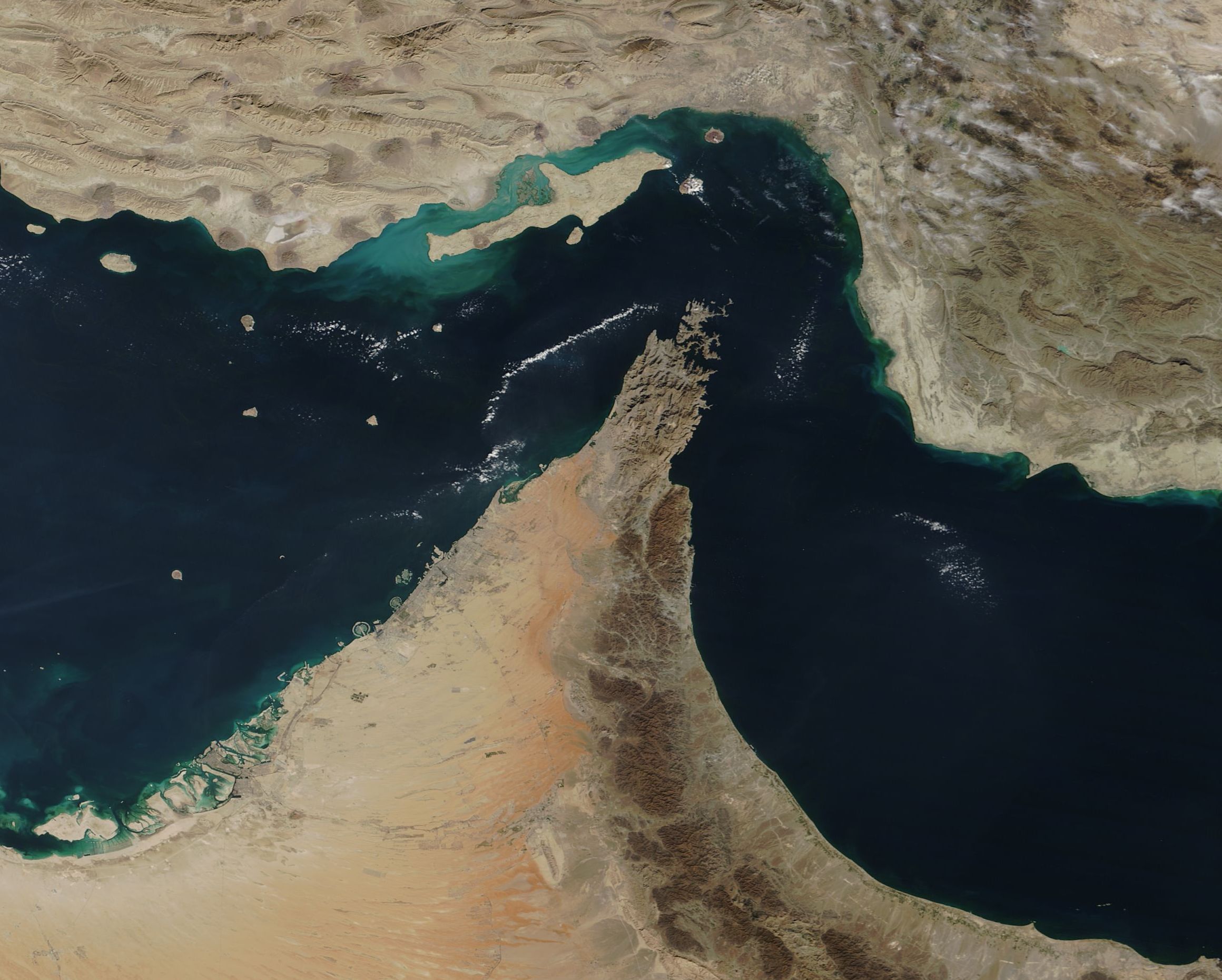
The Strait of Hormuz is a 21-mile-wide funnel between Iran and Oman through which about one fifth of the world's traded oil must pass. There is no pipeline network that fully replaces it. That is why the numbers coming out of it matter more than any communique.
Before the conflict, the waterway handled on the order of 130 vessel transits a day. Over the weekend of 10 to 12 July, trackers counted 57 in three days, a drop of more than half, and on Monday 13 July just 8.5 million barrels made it through, much of that under military escort. Analyst Rory Johnston of Commodity Context put it bluntly: "Traffic through Hormuz is grinding to a halt."
The human cost has been steady and grim. Iranian attacks on shipping have killed at least two seafarers and injured more than a dozen this month, according to CNBC. On 17 July, missile and drone attacks on a US base in Jordan killed two American service members; a drone attack in Iraq killed a third two days later. US Central Command has described its response as "a series of powerful strikes against Iran to impose heavy costs for targeting and attacking commercial shipping crewed by innocent civilians in an international waterway."
Every time Iran kills an American Soldier they will pay for that killing many times over.
Washington's next moves widen the uncertainty band in both directions. Trump has announced the reinstatement of a port blockade and floated charging transit fees with the US acting as "guardian" of the strait, a concept with no obvious precedent in maritime law and no obvious off-ramp either.
Where the forecasters land
| Analyst | Firm | View |
|---|---|---|
| Bart Melek | TD Securities | $100 Brent "quite possible" if shortage risks materialize |
| Saul Kavonic | MST Financial | Strait passage below 50% of pre-war levels "for many months" |
| Mukesh Sahdev | XAnalysts | Brent stays in the upper $70s through September (13 July call, already overtaken) |
| Fabien Yip | IG | A repeat spike "appears unlikely" on slow demand (also 13 July, also overtaken) |
The bottom two rows are worth keeping precisely because they aged badly in a week. Forecasts made on 13 July assumed the strait disruption would ease; instead it deepened, and Brent blew through both firms' ceilings within days. The lesson is not that analysts are foolish. It is that this market is now pricing a war, and wars do not respect base cases.


What $100 oil would actually mean
For markets, the oil spike is already the counterweight to everything else. Equities wobbled Monday under rising crude before chip stocks pulled indexes back up on Tuesday, and the earnings calendar now doubles as an exposure map: Halliburton reported today with an oilfield-services read on the boom, while Alphabet and Tesla report Wednesday into an economy where energy costs are suddenly a line item again.
For everyone else, the math is blunter. Sustained $100 crude feeds into freight, airfares, food and every inflation print that central banks were finally starting to trust. Stockpile releases blunted the first round of this conflict in the spring; as Sparta Commodities' June Goh warned, "Crude oil is fast losing its strategic petroleum reserve buffer." The cushions are thinner this time.
The one scenario that unwinds all of it is the same one that ended the spring round: a ceasefire like the June 17 memorandum, which deflated the premium almost as fast as it built. That possibility is real, and so is the opposite one, in which the strikes widen and the strait closes in fact rather than in declaration. Between those two futures sits a $91.72 barrel, twitching on every headline out of the Gulf. The market has stopped asking whether this is serious. It is asking what serious costs.