RECENT DEVELOPMENTS IN SARASOTA COUNTY AFFORDABLE HOUSING CASE HIGHLIGHT THE DEPTH OF THE ISSUE FOR THE PUBLIC

Florida Attorney General James Uthmeier files Amicus Brief in Sarasota County affordable housing case SITC, Inc. v. Sarasota County
TALLAHASSEE, Fla.—November 24, 2026—Recent developments in the Sarasota County affordable housing case SITC, Inc. v. Sarasota County (Case No. 2026-CA-002807) highlight the importance of the issue for the public. In particular, on November 12, Florida Attorney General James Uthmeier filed a friend-of-the-court brief that supports a developer whose workforce-housing application Sarasota County refused to consider under Florida’s Live Local Act.
The Amicus Brief is the latest expression of a growing sentiment among officeholders in Florida. For example, Gov. Ron DeSantis said, “We have residents that are locked into their homes, because they can’t afford the taxes on a new residence.... Others have been priced out of the market entirely,” in his 2026 State of the State speech. Gov.-elect Byron Donalds similarly noted, on November 5, “When I was traveling the State of Florida, talking to voters in every county of our state, that was the number one issue on their mind: gas, affordability, housing costs, food.”
These developments and remarks underscore the affordable housing challenge facing the United States, which short millions of homes that working people can afford. In statehouses from California to Texas to Montana, lawmakers in both parties have reached the same conclusion: local barriers that block new housing are a big part of the problem. And across the country, some local governments are fighting back against the laws meant to fix it.
The Sarasota case shows what the crisis looks like up close. Across America, nurses, teachers, cooks, and caregivers are being priced out of the communities that depend on them. To address the issue, the state passed a law to let homes get built; the county’s own lawyers said to follow it, but commissioners refused.
A national emergency, by the numbers
• A record 22.7 million renter households — nearly half of all renters — spent more than 30% of their income on housing in 2024, according to Harvard’s Joint Center for Housing Studies. That is 2.3 million more than in 2019. 12.1 million of them spent half or more of their income on housing.
• Among renters earning under $30,000 a year, 83% are cost-burdened.
• The National Low Income Housing Coalition’s 2026 Gap report finds a national shortage of 7.2 million homes affordable and available to the lowest-income renters. There are only 35 such homes for every 100 households that need one, and no state has enough.
• Florida’s housing crunch is among the nation’s worst. In the Orlando metro area, there are just 13 affordable and available homes for every 100 extremely low-income renter households, tied with Las Vegas for the most severe shortage among the 50 largest metros.
• The typical home now costs nearly five times the median household income, the widest gap Harvard researchers have ever recorded.
States are acting. Some localities are resisting.
Since 2022, a growing number of states have passed laws limiting the ability of local zoning to block housing, and the trend crosses party lines. California now requires taller apartment buildings near transit. Montana’s Republican-led reforms have been dubbed the “Montana Miracle.” Texas passed laws allowing housing on commercial land by right.
Resistance has followed close behind. California cities sued the state over its housing mandates and lost. In Texas, Gov. Greg Abbott has threatened cities that use zoning workarounds to dodge new state laws.
Florida’s answer is the Live Local Act, passed with bipartisan support in 2023 and strengthened every year since. It requires that at least 40% of a project’s units stay affordable for 30 years. In exchange, qualifying projects receive administrative approval and cannot be blocked through years of discretionary hearings.
Sarasota: a case study in obstruction
The Attorney General’s brief notes that Sarasota County’s median home price exceeds what a local household can afford by more than $200,000. It also cites HUD data showing that almost a quarter of residents in the North Port–Sarasota–Bradenton region spend over half their income on rent.
County leaders were warned at every step:
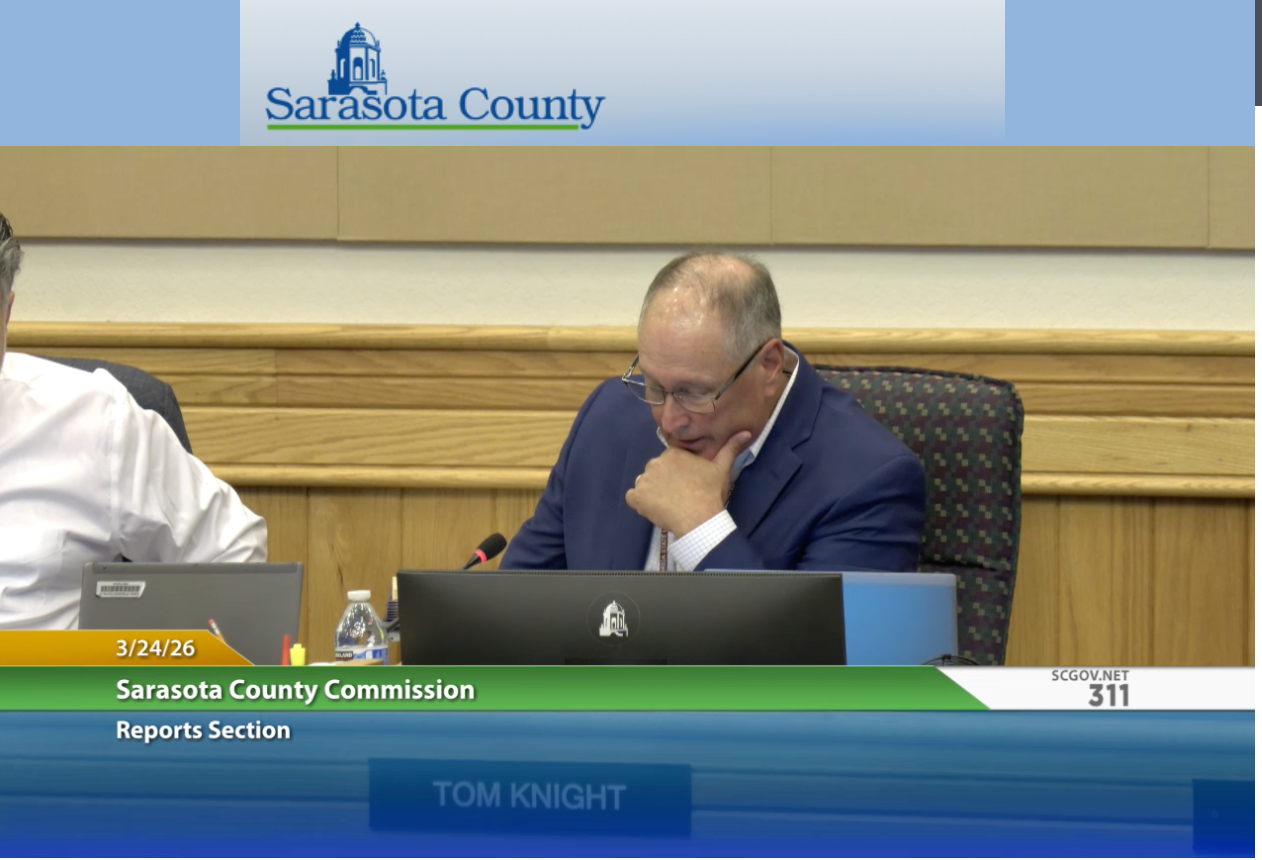
• March 24, 2026: County staff told commissioners that Live Local applications must be approved administratively and that eligibility depends on what uses a zoning district allows, not its name. The County Attorney cautioned that losing in court could cost taxpayers up to $250,000 in fees per case. Commissioner Tom Knight responded that if the county was going to be sued, he would rather be sued by developers.
• April 3: The County Attorney’s memo warned that defending an exclusion of rural zoning would be an “uphill battle given the strict language of the Live Local Act.”
• April 7: Commissioners voted unanimously to exclude Residential Estate and Open Use districts anyway, blocking six of seven proposed projects.
• September 16: Responding to the county’s own request, the Attorney General’s Office concluded that those districts qualify, because they allow commercial uses such as veterinary clinics and animal boarding by right.
• November 12: The Attorney General told the court the county “has ignored the opinion it requested.” According to the brief, the court has already reached the same conclusion in a related case, D.R. Horton, Inc. v. Sarasota County.
By the fall, at least six lawsuits were pending against the county over thousands of proposed homes, and county taxpayers were funding a defense their own attorney had called an uphill battle.
The reversal: “writing on the wall”
On November 4, Circuit Judge Hunter W. Carroll ruled against the county in D.R. Horton, Inc. v. Sarasota County. He rejected its argument that the Live Local Act does not reach rural districts that allow limited commercial uses, and ordered a proposed project near the Celery Fields to move forward in review. Eight days later, the Attorney General filed his brief. Carroll is also the judge assigned to the other Live Local cases against the county.
On Tuesday, November 17, the County Commission voted 3–2 not to appeal. The decision ended the county’s legal resistance and cleared the way for more than 7,600 proposed homes across 18 projects.
The pivotal vote belonged to Commissioner Tom Knight, who had been the board’s most vocal advocate for fighting Live Local in court. In March, he told colleagues he would rather be sued than see staff accept developers’ reading of the law. In November, with more than 60 residents signed up to urge an appeal, he voted to drop it. Knight and Chair Ron Cutsinger both pointed to the Attorney General’s brief as the “writing on the wall.” Newly sworn-in Commissioner Jim DeNiro, elected weeks earlier on a “Stop Overdevelopment” platform, cast the third vote.
Knight did not frame the vote as an admission of error. “We were looking out for them when we did this,” he said of the residents in the chamber. “We’re trying to protect our citizens from Tallahassee.” He suggested residents take their concerns to state legislators, who wrote the law.
“We give Commissioner Knight credit for accepting where the law stands,” said a resident who requested anonymity. “But Sarasota spent seven months, and an untold amount of taxpayer money, learning what its own county attorney told it in April. The lesson for every local official in America is simple: the time to follow the law is before the lawsuits, not after.”
What the public appears to want
Advocates for affordable housing want:
• Enforce the laws already on the books. State housing laws mean nothing if local governments can defy them without consequence. Courts and attorneys general should hold localities to the law as written.
• Sarasota County should finish the job: formally rescind its April 7 policy, resolve the remaining lawsuits, and publicly disclose what the fight has cost taxpayers.
• Fund deeply affordable homes. Zoning reform opens the door, but Harvard and NLIHC both find that serious federal investment is needed to reach the lowest-income families. Congress should expand rental assistance and the Housing Trust Fund.
• Center renters and workers. Housing decisions should include the people who need homes, not only those who already have them.
Next Board of County Commissioners Meeting is set for Tuesday, December 15, 2026, from 9:00am to 5:00pm.
###
Sources: Amicus Brief and Motion for Leave of the Florida Attorney General, SITC, Inc. v. Sarasota County, No. 2026-CA-002807 (Fla. 12th Cir. Ct., filed Nov. 12, 2026); Op. Att’y Gen. Fla., Response to Joshua B. Moye (Sept. 16, 2026); Harvard Joint Center for Housing Studies, The State of the Nation’s Housing 2026; National Low Income Housing Coalition, The Gap: A Shortage of Affordable Homes
(March 2026); U.S. Dept. of Housing and Urban Development, Comprehensive Housing Market Analysis, North Port–Sarasota–Bradenton (April 2025); Order, D.R. Horton, Inc. v. Sarasota County, No. 2026-CA-003547 (Fla. 12th Cir. Ct., Nov. 4, 2026); Sarasota County Commission meetings of March 24, April 7 and November 17, 2026.
About the Author: Hugh Taylor
Hugh Taylor is a Certified Information Security Manager (CISM). In addition to editing Journal of Cyber Policy, he writes about cybersecurity, compliance, and enterprise technology for clients such as Microsoft, IBM, SAP, HPE, Oracle, Google, and Advanced Micro Devices. Prior to launching his freelance writing career, he served in executive roles at Microsoft, IBM, and several venture-backed technology startups.